
Commercial spaces need flooring that stands up to foot traffic, spills, safety codes, and tight timelines. When you look at tile flooring, you’re usually choosing between classic ceramic tile and newer vinyl tile (LVT). They solve different problems, and picking wrong can mean higher costs or delays you don’t want.
For most commercial spaces, vinyl tile is the go-to if you want quicker installation, quieter floors, and less maintenance. Ceramic tile, though, is better for areas needing heat resistance, long life, and a hard, rigid surface. Vinyl uses layered PVC and wear layers, so you get flexible tiles or planks that can go right over uneven slabs. Ceramic is kiln-fired clay—hard, but it needs a flat base and grout.
This comparison looks at slip safety, comfort, installation speed, maintenance, and total cost. You’ll see how each material actually performs in real places—offices, healthcare, retail, food service—so you can pick what fits your space, not just the brochure version of it.
Understanding Ceramic Tile: Definition, Advantages, and Disadvantages
Ceramic tile is a hard-surface flooring made from natural clay, fired at high heat. Manufacturers press clay into shape, then fire it in a kiln, often glazing the surface. That creates a rigid tile for floors, walls, and counters. You get consistent sizes, repeatable patterns, and finishes that work in lots of commercial interiors.
The Main Advantages Of Using Ceramic Tile In Commercial Settings
Ceramic tile brings high surface hardness—firing turns clay into a dense, tough body. In daily life, this shrugs off scratches from shoes, carts, and light gear, so floors stay looking clean in offices or retail.
Glazed ceramic tile offers water resistance at the surface. The glaze acts like a glassy shield, blocking spills and moisture. That’s why ceramic works in restrooms, break rooms, and food prep spots if seams stay sealed.
Ceramic tile delivers long-term visual consistency. Color’s in the glaze, so it doesn’t fade under indoor lights. You can pick from structured patterns, matte or gloss, or stone-look designs that fit formal or neutral spaces.
Key benefits at a glance
●Fired clay stands up to daily foot traffic
●Glazed surface makes cleaning easier
●Stable color and shape for uniform layouts
The Disadvantages And Limitations Of Ceramic Tile
Ceramic tile is brittle under impact. The surface resists scratches, but drop a heavy tool or put too much pressure on one spot, and you’ll chip an edge. Usually, repairs mean popping out a single tile to keep things flat.
Ceramic floors feel cold and hard underfoot. That dense clay doesn’t flex or insulate. Staff who stand for hours? They’ll notice the lack of comfort unless you add mats.
Maintenance is mostly about grout lines. Grout absorbs dirt and stains, so you have to seal it and clean it regularly to keep things sanitary.
Installation takes time. You need to prep the subfloor, let mortar cure, and wait for grout to set. That longer window can keep parts of your space closed longer than you’d like.
Understanding Vinyl Tile (LVT): Definition, Advantages, and Disadvantages
Definition: Vinyl tile is a multi-layer synthetic floor made from polyvinyl chloride (PVC). It mimics wood or stone but adds flexibility and impact resistance that hard surfaces just can’t match.
Vinyl flooring pops up in offices, stores, and healthcare because it goes in fast, feels softer, and shrugs off water. Still, sharp loads and heat are real limits you have to think about.
The Main Advantages Of Using Vinyl Tile For Commercial Projects
Luxury vinyl tile (LVT) and vinyl plank (LVP) use layers—a printed design and a clear wear layer, usually 12–30 mils thick. Thicker wear layers mean better scuff resistance, so busy spaces show fewer marks.
Installation is quick. Click-lock LVT, planks, and sheet vinyl can often go right over old floors. That means less downtime during renovations.
Vinyl tiles feel a bit springy because the PVC core flexes. Staff on their feet all day? Their legs will thank you. Cleaning stays simple—dry sweep, damp mop, no sealing or grout to fuss over.
Design choices are wide open. Pick tiles, planks, or VCT with colors and patterns that stay consistent across big areas.
The Disadvantages And Limitations Of Vinyl Tile
Vinyl tile stands up to wear, but not sharp force. Heavy chair legs or dropped tools can puncture the wear layer. Usually, that means swapping out the whole tile, not just patching a spot.
Heat is another issue. Vinyl softens up when it gets too hot because PVC reacts to heat. So, spots near ovens, welders, or intense sun need extra planning.
Lifespan varies. Many LVT floors last 10–20 years in normal commercial use. That’s shorter than ceramic, especially where you’ve got rolling loads or grit coming in from outside.
Comparison Round 1: Slip Safety And Risk Management In Ceramic Vs. Vinyl Tile
Slip safety’s a big deal in commercial spaces. Wet floors mean higher fall risk, so the way a surface behaves really matters.
Ceramic tile usually has a hard, smooth surface. Add water, oil, or cleaning fluid, and friction drops fast. So, floors can get slick during spills or mopping—think kitchens, restrooms, entryways.
Some ceramic tiles get textured glazes or added grit to boost traction. These help by adding roughness, but over time, foot traffic and cleaning can wear them down, making maintenance more of a chore.
Vinyl tile often has embossed or textured wear layers. Those little grooves help channel water away, so you get more reliable traction in wet spots—no need to rely on surface coatings as much.
Vinyl’s core is softer and more forgiving. It compresses a bit, so if someone falls, injuries might be less severe. From a risk perspective, that can lower the impact when slips do happen.
Comparison Round 2: Underfoot Comfort And Acoustic Performance Of Flooring
You’ll notice the difference underfoot between ceramic and vinyl tile right away. The core material changes everything for comfort during long shifts.
Ceramic tile is just rigid clay. It doesn’t flex, so it sends force right back up into your feet and legs. That’s why people who stand or walk a lot feel fatigue sooner.
Vinyl tile is layered with PVC and plasticizers, so it compresses a bit and bounces back. This cushioning is easier on joints and feels better during long days.
Sound is another factor. Ceramic is hard and reflective, so footsteps and rolling carts sound sharper and echo more.
Vinyl tile often comes with a foam or pad backing, usually 1–2 mm thick. That absorbs vibrations, so walking noise drops and sound doesn’t travel as much to the next room.
Comparison Round 3: Installation Speed And Substrate Tolerance For Renovations
Downtime during renovations costs you. Installation speed and how picky a floor is about the base make a big difference in how fast you can reopen.
Ceramic tile installation needs a really flat subfloor. Guidelines say about 1/8 inch over 10 feet—otherwise, rigid tile and grout will crack. That means demolition, leveling, and underlayment before you even start tiling.
Ceramic uses wet-set mortar and grout that have to cure. Installers can’t rush it, so jobs often stretch over several days. That’s more closure time and more moving parts to coordinate.
Vinyl tile installation is quicker since many products go right over old floors. Vinyl planks and tiles flex just enough to handle small imperfections, so you can usually get by with cleaning and a few repairs.
Most vinyl systems let you walk on them right away. That means crews finish faster and you get back to business sooner, even if you’re renovating in phases.
|
Factor |
Ceramic Tile |
Vinyl Tile |
|
Subfloor tolerance |
Requires tight flatness (≈1/8″ in 10 ft) |
Handles minor uneven areas |
|
Prep work |
Demolition, leveling, underlayment |
Often installs over existing floors |
|
Time before use |
Delayed due to mortar and grout cure |
Immediate or same-day use |
You’ll want a professional for both, but vinyl skips a lot of prep. That’s a big deal when your schedule’s already tight.
Comparison Round 4: Long-Term Maintenance Costs And Hygiene (Grout Vs. Seamless)
Ceramic tile has grout lines between each tile. Grout’s made with cement and sand, so it’s naturally porous. Over time, it soaks up moisture, dirt, and bacteria.
You’ll need to scrub grout regularly with a cleaner—alkaline or acidic formulas both work, but either way, it takes some effort. In busy places like restrooms or kitchens, that means more labor and stronger chemicals.
Most commercial tile needs grout sealing every year or two. Sealers slow down moisture getting in, but they wear off from foot traffic and cleaning. So, you’re looking at ongoing costs as long as the floor’s in use.
Cracked grout can lead to tile replacement. If moisture gets under the tile, it weakens the bond. Sometimes, a small crack means replacing more than just one tile—whole sections might need to go.
Vinyl tile, on the other hand, uses tight-lock edges or heat-welded seams. That creates a non-porous surface, so spills stay on top. You can mop up messes and bacteria without heavy scrubbing.
Comparison Round 5: Total Cost Analysis of Ceramic Tile vs. Vinyl Tile
Don’t just look at the price per square foot—think about the total installed cost. Material cost alone misses labor, prep, and future care.
Vinyl tile usually runs $2–$7 per square foot for materials, with installation adding $2–$5. Ceramic tile starts near $3 per square foot, but labor’s pricier thanks to cutting, mortar, grout, and longer install times. Vinyl’s faster to install and typically costs less upfront.
Ceramic tile needs a flatter, stronger subfloor. Installers might add cement board or leveling compounds, which bumps up time and costs even if tile prices look similar at first glance.
Maintenance matters, too. Ceramic grout lines need sealing and cleaning, so you’ll spend more on labor or services over time. Vinyl’s welded seams don’t need sealing, so upkeep is simpler.
How to Choose Between Ceramic Tile and Vinyl Tile for Your Project
Pick what fits your space’s daily use. Moisture, traffic, cleaning, and design all play a role. Budget and install time matter, too—sometimes more than people admit.
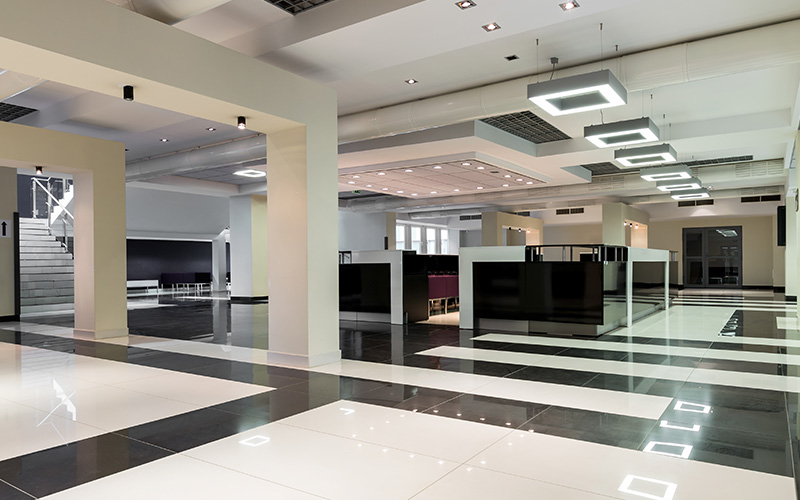
When To Choose Ceramic Tile For Specific Commercial Environments
Ceramic tile’s a go-to if your space sees constant water, heat, or heavy wear. It’s kiln-fired, so you get a tough, dense surface. That means you can use it in shower rooms, busy kitchens, or patios without worrying about swelling or warping.
It’s also great for spaces that need a set look. Glazed ceramic gives you consistent color and patterns, while unglazed tile offers texture and slip resistance. Handy for historic buildings, hotels, or luxury shops where the floor’s part of the brand.
Installers need a rigid, level subfloor and mortar. It takes longer, but with good grout care, the floor can last decades.
When To Choose Vinyl Tile For Modern Commercial Spaces
Go with vinyl tile if you want speed, comfort, and simple upkeep. The layered PVC construction handles slight subfloor movement, so it installs fast and forgives minor flaws. Offices, schools, or stores can get back to business sooner.
Vinyl stands up to daily cleaning. Most have a factory-applied wear layer to fight stains and scuffs. Staff can mop with neutral cleaners—no sealing or grout worries.
Design-wise, vinyl’s flexible. Printed layers mimic wood, stone, or concrete, keeping color consistent across big spaces. That makes phased renovations or future repairs less of a headache.
Conclusion: Making The Right Flooring Investment
You really have to match the flooring to how your space works. Ceramic tile is tough—good for heavy loads and heat, thanks to its kiln-fired surface. Carts or hot equipment won’t damage it, but you’ll need to keep up with grout care.
Vinyl tile (LVT) makes sense if you want less downtime and more comfort. Its layered PVC core means faster installs, quieter rooms, and less leg fatigue for staff on their feet all day.
Don’t just look at the sticker price. Ceramic might seem cheap at first, but once you add labor, underlayment, grout, and sealing, costs can creep up. Vinyl lowers install time and lets you walk on it right away—less lost revenue.
Here’s a quick guide:
|
Your Priority |
Choose This |
Why It Matters to You |
|
Heat and point loads |
Ceramic Tile |
Hard, fired surface resists heat and dents. |
|
Fast renovation |
Vinyl Tile |
Click or glue systems shorten closure time. |
|
Hygiene and cleaning |
Vinyl Tile |
Fewer seams reduce moisture and soil traps. |
|
Long service life |
Ceramic Tile |
Properly maintained tile lasts for decades. |
Frequently Asked Questions
How does the performance of vinyl plank flooring compare to ceramic tile in high-moisture areas like bathrooms?
Vinyl plank flooring has a waterproof core—usually PVC or SPC (stone plastic composite). The planks lock together without grout, so water can’t get through. You’ll see fewer leaks and less risk of moisture damage under the surface.
Ceramic tile resists water on top, but the grout lines in between are porous unless you seal them. Moisture can sneak through eventually, so you’ll need to seal and clean regularly to avoid stains or mold.
What are the key differences between engineered and traditional ceramic tiles for commercial flooring?
Traditional ceramic tiles use a clay body fired in a kiln, then glazed for color and wear resistance. They work in light to medium traffic but might chip if the body’s soft. So, in high-traffic or heavy-use areas, you’ll want to be careful.
Engineered ceramic tiles—usually porcelain—use refined clay fired at higher temps. They’re denser and absorb less water, often under 0.5%. That means they’re better for heavy loads and moisture, with less risk of cracking.
How do luxury vinyl tiles stack up against ceramic tiles in terms of durability for commercial applications?
Luxury vinyl tile’s durability depends on the wear layer, which ranges from 12 to 28 mils. Thicker layers resist scratches from foot traffic and rolling equipment. If you pick the right one, LVT holds up in offices, retail, and classrooms.
Ceramic tiles use PEI ratings—Class IV or V is best for commercial floors. The glaze is fired into the tile, so it resists surface wear and lasts longer in busy spaces.
Which type of tile offers the most benefits for high-traffic commercial spaces?
Ceramic tile with a PEI Class IV or V rating stands up to heavy foot traffic. Its tough, fired surface shrugs off scratches and scuffs, while the sturdy build resists dents from carts or dropped items. If you’re tired of floors looking worn after a year, this could be the way to go.
Luxury vinyl tile makes repairs a breeze since you can swap out single planks or tiles. That means less hassle and shorter closures for maintenance. In a busy place, being able to fix just the problem spot without roping off half the floor? That’s a real plus.