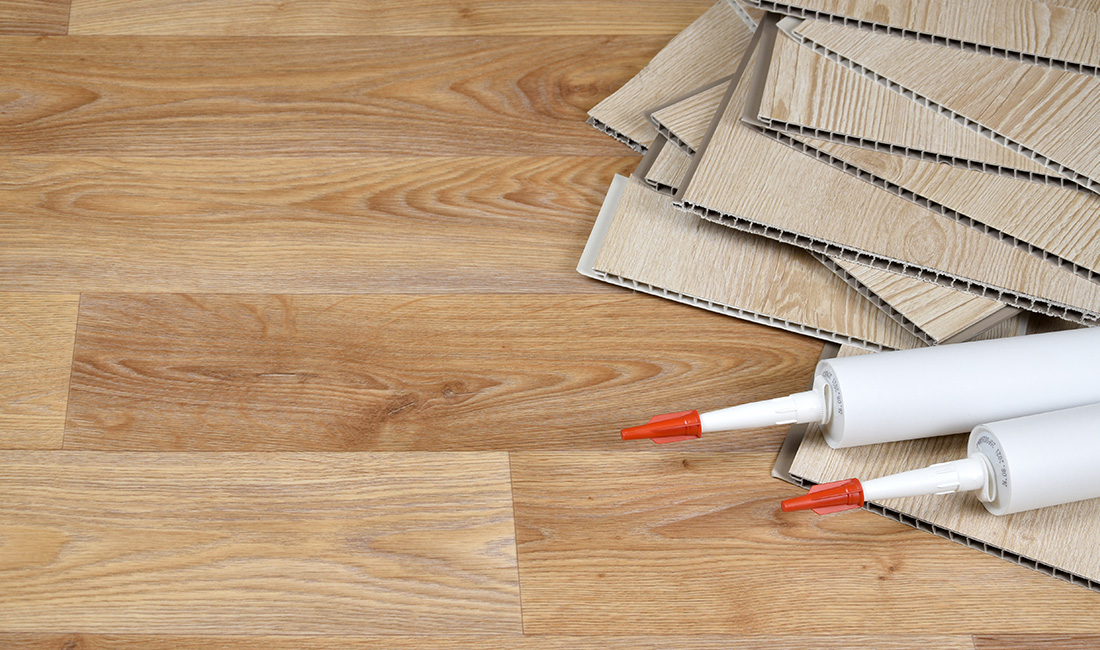
Glue-down vinyl plank flooring is a commercial-ready LVT/PVC flooring system built around one thing: bond strength. Instead of floating on a click-lock edge, each plank is adhered directly to the subfloor, which improves flatness across large areas and helps control seam movement under rolling loads. That’s why specifiers choose glue-down for retail aisles, offices, hospitality corridors, and other spaces where traffic, chairs, and carts punish weak joints.
But glue-down performance doesn’t come from the plank alone. The outcome depends on a tight chain of variables—product specification, approved adhesive selection, subfloor flatness, moisture limits, open time discipline, and rolling/transfer quality. If any link breaks, the same advantages that make glue-down attractive can turn into expensive failures like delamination, bubbling, or seam separation.
This guide walks through the system logically—from what to specify, to how to choose the right adhesive, to how to prep the subfloor, and finally the top failure modes that drive commercial claims. If you’re installing, specifying, or sourcing LVT/PVC for a project, you’ll leave with a practical framework to reduce risk, protect warranties, and keep the floor stable for years.
Understand The Glue-Down Vinyl Plank System
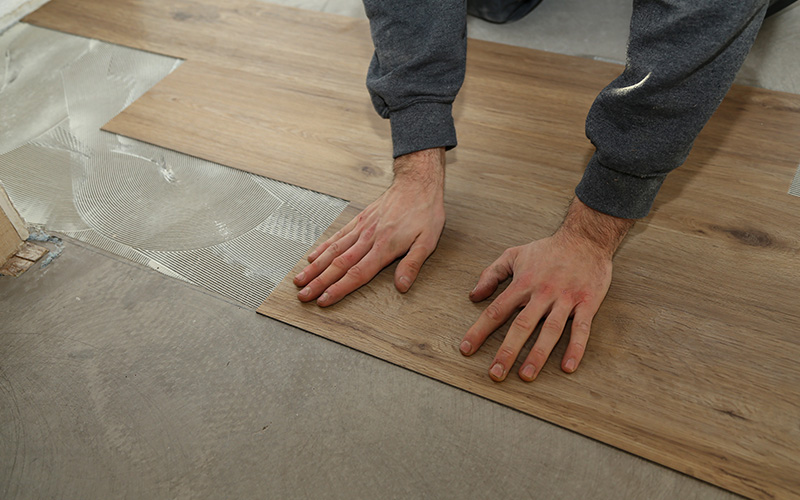
Glue-down vinyl plank flooring bonds PVC planks directly to the subfloor with a pressure-sensitive or hard-set adhesive. The adhesive creates full contact, so the system limits movement and seam shifts. This directly impacts joint stability under rolling loads.
Glue-down sits within the LVT category but differs from floating designs. Instead of a locking edge, glue-down planks rely on bond strength, not mechanical clicks. The floor stays flatter across large spaces.
Commercial spaces usually go with glue-down for a reason. Retail aisles, offices, and hospitality corridors get constant point loads and chair movement.
When failure risk rises with traffic, spec discipline around adhesive type and trowel size really matters. Performance comes down to material traits and install control.
Vinyl resists water, but the adhesive and subfloor must manage moisture. By controlling vapor limits and flatness, the system stays durable and makes maintenance like plank replacement much easier—no need to rip up the whole floor.
Define The Product Specification That Drives Adhesive Performance
Product specification decides how glue-down vinyl plank flooring bonds to the subfloor and how long that bond lasts under use and site stress.
●Product Type: Glue-down planks have LVT/PVC layers with a vinyl wear layer over a backing. Since PVC expands with heat, the adhesive needs to allow some movement without losing its grip.
●Wear Layer & Traffic Rating: Thicker wear layers (20–30 mil) target commercial use. Denser planks put more shear stress on adhesives during rolling loads and turns.
●Plank Thickness & Density: Thicker, stiffer planks resist bending. This affects adhesive set strength because rigid planks transfer more force to the glue line.
●Plank Size & Tolerances: Wider or longer planks ramp up expansion forces. Adhesives must limit lateral movement to prevent gaps or edge lift.
●Dimensional Stability: Products rated for wide temperature swings handle sun and HVAC changes better. Stable constructions put less stress on the adhesive during thermal cycling.
●Backing Type: Smooth-backed planks bond differently than textured or fiberglass-backed planks. Adhesive spread rate and trowel size have to match the backing profile.
●Surface Finish & Compatibility: Some factory finishes resist adhesive wet-out. Manufacturers require approved adhesive systems for warranty compliance.
●Approved Adhesive Types: Manufacturers list pressure-sensitive or hard-set adhesives. Using unapproved glue risks bond failure and voids the warranty.
●Required Site Conditions: Specs define subfloor moisture limits, flatness, and cleanliness. Adhesives only perform as tested when you meet these conditions.
How To Select The Right Adhesive
Choosing the right adhesive for glue-down vinyl plank flooring depends on the following factors:
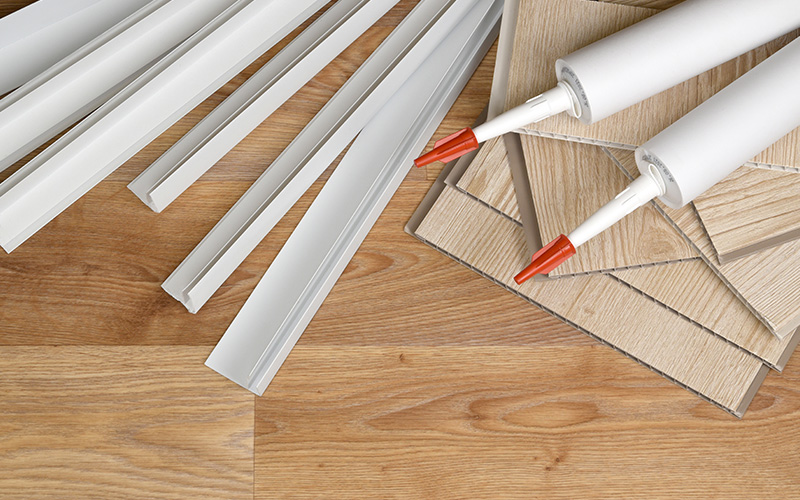
Installation efficiency: Pressure-sensitive adhesives (PSA) let you move faster because they stay tacky after flashing off. Crews can work in stages without rushing. Wet-set adhesives grab quickly, but with a short open time, you need a precise layout and steady pace.
Durability: High-traffic areas need adhesives rated for heavy loads and shear strength. This affects resistance to plank shifting and seam creep. PSA works for residential and light commercial, while wet-set handles rolling loads better.
Moisture tolerance and compatibility: Concrete slabs need moisture-tolerant adhesives if RH or pH runs high. Using products rated for higher RH limits lowers bond failure. Wood subfloors need adhesives that handle movement, avoiding brittle bond lines.
“Approved system” principle: Manufacturers test specific planks with specific adhesives. Approved pairings protect your warranty and performance. Using off-list products increases risk since backing chemistry varies by brand.
How To Prepare Subfloor
Below are the steps to prepare the subfloor:
Step1: Remove contaminants (dust, curing compounds, sealers, paint, oils)
Contaminants block adhesive contact with the subfloor. Scrape, sand, or vacuum away debris, old glue, and coatings so the adhesive wets out properly and achieves full bond strength.
Step2: Repair cracks, joints, and spalls
Cracks and damaged areas create stress points under plank edges. Fill and stabilize these defects with approved repair materials so the floor resists telegraphing and localized bond failure.
Step3: Leveling/patching to the required flatness
Glue-down planks follow the subfloor shape. Use patching or self-leveling compounds to meet flatness limits, usually within 3/16 inch over 10 feet, which helps prevent plank edge lift.
Step4: Primers when needed (especially with leveling compounds)
Porous or dusty substrates pull moisture from patching materials and adhesives. Apply the right primer to get consistent absorption, which improves cure and adhesive transfer.
Step5: Check subfloor flatness and smoothness
High spots and rough textures show through thin vinyl planks. Achieve a smooth finish so the adhesive spreads evenly and the plank face stays uniform under traffic.
How To Identify The Top Failure Modes And Their Root Causes
Below are the common failure modes the root causes:
Delamination: Moisture, the wrong adhesive, missed open time, or not enough rolling can reduce bond strength. Planks lift because the adhesive never fully keys into the backing or subfloor.
Bubbling/Blistering: Vapor pressure, adhesive skinning, or trapped solvents push up under the plank. The surface forms raised bubbles after install.
Gapping/Seam separation: Dimensional movement, poor acclimation, or substrate variation pull planks apart. Joints lose stability when temperature or humidity changes go past tolerance.
Peaking/Tenting: Perimeter pinching, uneven adhesive ridges, or thermal expansion force planks upward. Restricting movement makes the floor rise at seams or edges.
Telegraphing: Inadequate patching, substrate texture, or debris under planks show through the wear layer. Surface flaws mirror the subfloor profile.
Adhesive transfer failure: The wrong trowel size, dried adhesive, or a dusty substrate limit wet contact. If transfer stays below spec, planks release under light stress.
Build A Commercial Spec Checklist That Reduces Delamination Risk
The checklist covers before delivery, install day, and after install:
Pre-install checklist:
Product Match: Make sure product and adhesive approvals match. Some adhesives fail with certain LVP backings.
Moisture Plan: Set up a moisture testing plan and thresholds. Use slab RH or calcium tests to block installs over wet slabs that could weaken adhesive.
Subfloor Prep: Define subfloor prep scope and responsibility. Clear ownership ensures smooth, clean, flat surfaces and prevents telegraphing and voids.
Conditioning: Meet environmental conditioning requirements. Stable temperature and RH protect adhesive open time and cure.
Install-day checklist:
Logs: Keep RH and temperature logs. Swings can shorten open time, so logs help keep timing under control.
Timing: Track adhesive open time. Proper tack prevents sliding and lumpy set.
Rolling: Stick to the rolling schedule. Timely rolling ensures full transfer and contact.
Post-install checklist:
Cure: Allow proper cure time before traffic. Keeping people off protects the early bond.
Care: Use the right maintenance guidelines and cleaning products. The wrong cleaners can soften adhesive.
Handover: Provide owner handover documentation. Records support compliance and future claims.
Conclusion
Glue-down vinyl plank flooring works as a system. Here, product spec, adhesive type, moisture control, subfloor quality, and workmanship all play off each other.
Each plank bonds right to the subfloor. So, your adhesive choice really shapes shear strength, cure time, and how stable everything stays over the years.
Adhesives differ. Some have more solids, some give you more open time, and some just handle moisture better. Pressure-sensitive acrylics fit drier, controlled rooms, while wet-set adhesives handle heavier loads and busier floors.
This stuff matters—it changes how much the planks move, whether seams stay tight, and how easy repairs are compared to floating floors.
The subfloor sets the tone for everything. Glue-down planks show every bump and dip, so you want things pretty flat—think 1/8 inch over 6 feet or so. Moisture is another headache. Limits, usually checked by RH or calcium chloride, keep adhesives from breaking down and stop those annoying edge curls.
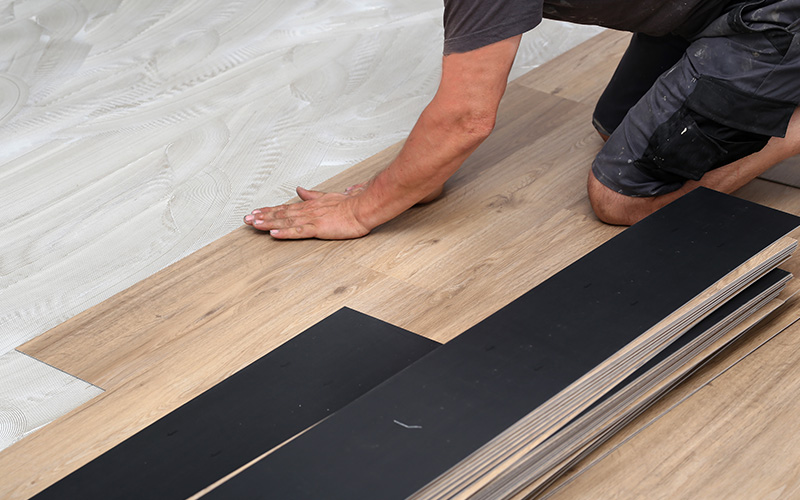
Workmanship? It’s huge. The right trowel, careful layout lines, and steady rolling pressure all make sure you get full adhesive transfer and a strong, even bond. If you skimp on spreading or skip rolling, you’ll see peaking, gapping, or the planks just letting go under pressure.
Commercial spaces tend to pick glue-down for traffic control and better stability. If you’re buying, don’t just go by looks—documented specs, tested adhesive compatibility, and compliance data matter way more.
Next steps for specifiers and buyers:
– Ask for a product spec sheet and the approved adhesive list.
– Double-check subfloor and moisture requirements.
– See if there are OEM options for plank size, wear layer, or finish.
– Make sure you get low-VOC and certification documents.
FAQs
What are the problems with glue-down vinyl plank flooring?
Moisture-related bond failure (delamination/blistering), subfloor imperfections telegraphing through, installation sensitivity (open time/trowel/rolling), and higher labor/removal difficulty vs floating floors.
What are the requirements for a subfloor for vinyl plank flooring?
Clean, dry, structurally sound, and flat/smooth—within the flooring/adhesive spec (commonly about 3/16″ over 10 ft). Moisture and pH must be within the manufacturer limits.
How long does glue-down vinyl plank flooring last?
Typically 10–20 years in residential use and 7–15 years in commercial spaces, depending on wear layer, traffic, maintenance, and moisture control.
What is the best adhesive for vinyl plank flooring?
The “best” is the manufacturer-approved adhesive for your specific plank and site conditions; choose a high-shear, moisture-tolerant option for heavy commercial traffic.