SPC and WPC are the main types of luxury vinyl flooring that distributors stock. They differ at the core material level.
SPC uses a solid calcium carbonate-filled core with a density of 1.9–2.1 g/cm³. WPC uses a foamed composite core with wood flour or limestone at 1.0–1.3 g/cm³.
This big density gap changes how the floors perform in shrinkage, impact resistance, shipping, and even how they fail. Distributors really need to understand these differences to handle product claims, control freight costs, and pick the right flooring for each market.
SPC gives better dimensional stability and hardness. But it comes with higher shipping weight and can chip at the edges.
WPC is quieter and more comfortable underfoot. It can expand more with heat and dents more easily under heavy furniture.
This guide looks at SPC and WPC vinyl flooring by core composition, dimensional stability, click-lock strength, container loading, and what works best for different markets.
What Are SPC and WPC Vinyl Flooring at the Material Level?
SPC and WPC are two rigid core vinyl types. They’re defined by core density, what fillers go in, and how much the core is foamed.
These differences affect how much you can fit in a container, how well the flooring handles heat, and what kind of claims you’ll deal with.
What is the core composition of SPC vinyl flooring?
SPC (stone plastic composite or stone polymer composite) uses a rigid, non-foamed core. It’s made from 60–80% calcium carbonate (very fine powder), 18–30% PVC resin, and 2–5% stabilizers. No foaming agent.
The MFA 2017 definition calls SPC core a solid polymer core. Density lands at 1.9–2.1 g/cm³ (ISO 1183 method).
A 4.0 mm SPC flooring plank weighs 7.6–8.0 kg/m². A 5.0 mm rigid core vinyl flooring plank weighs 9.5–10.5 kg/m². Because it’s heavy, you can only fit 1,800–2,200 m² in a 20’GP container.
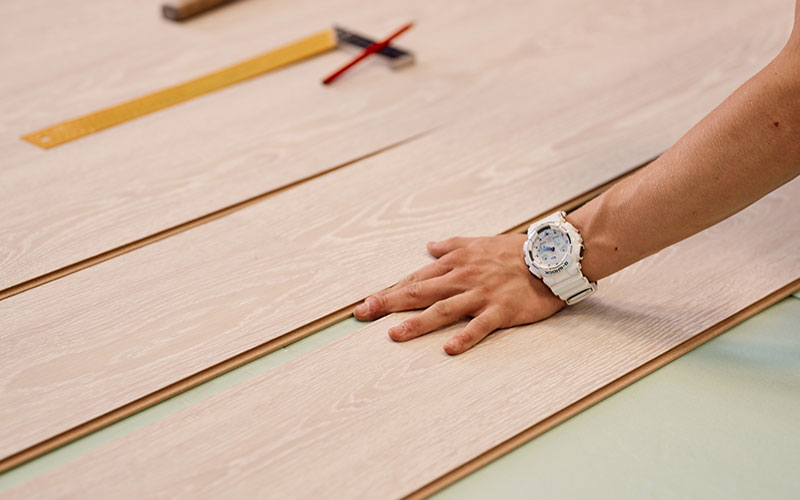
What is the core composition of WPC vinyl flooring?
WPC (wood plastic composite or wood polymer composite) uses a foamed core. It’s made from 30–40% wood flour or 40–50% limestone, 40–50% PVC, and 0.5–1.5% foaming agent (AC or ADC type).
The foaming agent makes the core expand 1.4–1.8 times its original size in extrusion. The MFA 2017 definition calls WPC core an expanded polymer core, with density at 1.0–1.3 g/cm³—a lot lighter than SPC vinyl flooring.
A 6.5 mm WPC flooring plank weighs 6.5–7.5 kg/m². An 8.0 mm plank weighs 8.0–9.5 kg/m². You can fit 2,800–3,200 m² in a 20’GP container, so it’s volume-limited, not weight-limited.
Why do distributors care about core construction?
Core density affects freight cost, how much the floor shrinks in heat, and what kinds of failures you’ll see. SPC core shrinks ≤1‰ after being heated at 80°C for 6 hours (pass is ≤2‰) and works from −20°C to +60°C.
But it weighs 60–90% more than WPC core, so you get 30–35% less in a container. It can also chip at the edges (2–4% claim rate) when it gets cold or is dropped during shipping.
WPC core fits more in a container and gets IIC 65–72 acoustic ratings without extra underlayment. But it shrinks more (2–3‰), only works from 0°C to +50°C, and dents under heavy furniture. It can blister above +50°C if containers get too hot, especially in tropical shipping routes.
How Does Core Density Compare Between SPC and WPC Vinyl Flooring?
SPC cores have densities between 1.9–2.1 g/cm³. They use calcium carbonate filler and no foaming agents.
WPC cores are lighter, at 1.0–1.3 g/cm³, thanks to foaming agents. This big gap changes how much flooring you can ship and how you stack pallets.
What is the density difference between SPC and WPC cores?
SPC cores range from 1.9 to 2.1 g/cm³. They’re made from 60–80% calcium carbonate, 18–30% PVC resin, and 2–5% stabilizers—no foaming agent.
WPC cores go from 1.0 to 1.3 g/cm³. Manufacturers add 0.5–1.5% foaming agent to a mix of 40–50% PVC and 30–50% wood flour or limestone, making the core expand 1.4–1.8 times. ISO 1183 is the method for checking core density.
How does density translate to weight per square meter?
A 4.0 mm SPC plank weighs 7.6–8.0 kg/m². A 5.0 mm SPC plank weighs 9.5–10.5 kg/m².
A 6.5 mm WPC plank weighs 6.5–7.5 kg/m². An 8.0 mm WPC plank weighs 8.0–9.5 kg/m². Even thicker WPC planks are lighter than thinner SPC ones, so buyers start thinking more about weight than just thickness when planning freight.
How does density affect container loading and freight?
SPC shipments in a 20’GP container hit the ~25-ton weight limit at 1,800–2,200 m². WPC shipments reach 2,800–3,200 m² before running out of space, not weight.
In 40’HQ containers, SPC loads 4,500–5,500 m² and WPC loads 6,000–7,000 m². WPC is about 20–30% more freight-efficient per square meter. Distributors who want the lowest landed cost often pick WPC for big jobs, and SPC for high-end commercial where durability matters more than shipping cost.
How Do Shrinkage Rate and Dimensional Stability Differ in SPC vs WPC?
SPC shrinks ≤1‰ after tempering, while WPC shrinks 2–3‰. This matters a lot for gapping claims in hot climates and during shipping.
The 80°C × 6h test simulates hot container shipping. SPC’s higher density keeps it more stable in heat and under EN 434 testing.
What does the 80°C × 6h shrinkage test measure?
This test puts planks at 80°C for six hours, like what happens in a hot shipping container. SPC usually shrinks ≤1‰ (≤2.5‰ pre-tempering), while WPC shrinks 2–3‰. The pass mark is ≤2‰ (EN 434).
Planks over 2‰ shrinkage get more gapping claims, especially if stored over +40°C before installation.
Why is SPC more dimensionally stable than WPC?
SPC’s dense core (1.9–2.1 g/cm³) and no foaming agents give it a low expansion rate of about 2.5×10⁻⁵/K. WPC’s is about double that, at 5.0×10⁻⁵/K.
The high calcium carbonate in SPC makes a tough matrix that resists expansion from −20°C to +60°C. WPC’s foamed core has tiny air pockets that change size with heat and cold, so it expands and contracts more. SPC stays stable even on concrete slabs with radiant heat.
How does shrinkage drive distributor claim risk?
Shrinkage over 2‰ means you’ll see 1.5–2.0 mm gaps in 1220 mm planks. That’s when customers complain about “defective installation.”
WPC distributors see 3–5% more claims in hot places like the Gulf Coast or Southwest, where warehouses can get over +45°C for long stretches. SPC usually gets less than 2% claims in the same places. Containers shipped in summer can hit 75°C inside, pushing WPC planks past the safe limit, while SPC mostly stays below it.
How Do Click-Lock Strength and Impact Resistance Compare for SPC vs WPC?
SPC has stronger joints and is harder on the surface. But it’s more likely to chip at the edges in cold shipping.
WPC is softer, so it absorbs impacts better. But it dents easier under heavy furniture and the joints can compress under stacked pallets.
What are the impact and indentation specifications?
SPC cores hit Brinell hardness of at least 40 N/mm² (EN 13329-B) and get ≤0.10 mm indentation (EN 433 test). WPC cores are softer, about 25 N/mm² Brinell, and get 0.15–0.25 mm indentation under the same loads.
WPC dent resistance depends a lot on having an attached underlayment or pre-attached backing like EVA layers. These can flatten out under heavy furniture, causing 30–40% of distributor return claims. SPC’s higher density gives better indentation resistance, but it can feel harder and louder, so you’ll want a separate EVA underlayment or IXPE underlayment for multi-family projects aiming for IIC ≥65 (ASTM E492).
How do click-lock systems perform in transit?
ASTM F1914 and F2199 tests show SPC joints at 200–300 lbf/in, while WPC is 150–220 lbf/in. Still, SPC planks chip more at the edges during cold shipping because the core gets brittle.
WPC click-locks fail more often by compression and vertical movement when pallets are stacked high (6–8 pallets) and containers get hot. SPC needs tighter manufacturing tolerances (±0.05 mm) than WPC (±0.08 mm) because the denser core doesn’t forgive mistakes. This raises SPC’s factory scrap rates by 8–12% but cuts down on gapping complaints after installation.
Which return claims are typical for each type?
SPC claims are mostly about short-edge chipping from shipping and cold brittleness. This causes 2–4% claim rates. You’ll see tiny cracks along the tongue or groove that stop the lock from working.
WPC return claims usually involve static-load indentation from furniture, blistering above +50°C in sunny rooms, and delamination of decor film or UV coating when the EVA underlay flattens out under pressure. Wear layer thickness (0.3 mm, 0.5 mm, 0.7 mm) matters more for visible damage than core type, but WPC’s lower flex strength (~1,500 MPa vs SPC’s ~3,500 MPa) lets it flex and crack more at the seams, especially without a good vapor barrier underlayment.
What Are the Pros and Cons of SPC and WPC Vinyl Flooring for Distributors?
SPC vinyl flooring gives you better density and stability. But it also leads to heavier containers and can make the click-edges brittle. WPC vinyl flooring lets you pack more into a container and offers better sound absorption. Still, it can shrink in heat and sometimes dents under heavy furniture.
Pros and cons of SPC vinyl flooring from a distributor’s view
Pros:
● The core density of 1.9–2.1 g/cm³ brings solid hardness and keeps indentations under 0.10 mm per EN 433. This means fewer claims about furniture legs causing dents, especially in commercial lines.
● SPC shrinks less than 1‰ after six hours at 80°C, so you can ship it through hot climates without worrying about temperature warping the boards.
● It works in temperatures from −20°C up to +60°C. That makes it good for cold warehouses and homes with radiant heating—no need for extra warnings or disclaimers.
● SPC usually gets a Bfl-s1 fire rating, so it qualifies for commercial use in the EU without extra flame-retardants.
Cons:
● Because it’s dense, you can only load 1,800–2,200 m² of SPC in a 20’GP container. WPC fits 2,800–3,200 m², so SPC cuts your gross margin per container by 30–40%.
● Short-edge click chipping happens, especially during drops or freezing weather. About 2–4% of distributor claims come from this, mostly in thinner planks.
● The minimum order for a single SKU is 3,000–5,000 m². That means your money’s tied up longer compared to sheet vinyl or glue-down LVT, especially in slow markets.
● Its IIC rating is 55–62, which doesn’t meet the multi-family HOA minimum of 65. You’ll need to add a 2 mm IXPE underlayment, bumping up your costs by $0.15–$0.25/ft².
Pros and cons of WPC vinyl flooring from a distributor’s view
Pros:
● The foam core is lighter at 1.0–1.3 g/cm³. You can pack 2,800–3,200 m² in a 20’GP and up to 7,000 m² in a 40’HQ, cutting freight costs by 35–50% compared to SPC.
● WPC usually hits IIC ratings of 65–72, so you don’t need extra underlayment for multi-family or HOA jobs. This makes planning and inventory simpler.
● It dampens sound and feels warmer underfoot, which helps when you’re selling to hotels, senior living, or homeowners who care about noise and comfort.
● WPC is GREENGUARD Gold certified and meets EPA TSCA Title VI rules. That covers California schools and healthcare jobs without extra testing costs.
Cons:
● WPC can shrink 2–3‰ at high heat, and its CTE is about double SPC’s. If it sits in a hot container or gets used in sunrooms, you might get claims about warping.
● It dents more under heavy furniture—indentations can reach 0.15–0.25 mm. Returns are 40–60% higher than SPC in areas with lots of heavy items.
● The MOQ is bigger—5,000–8,000 m² per SKU—because of how the foam is made. That means more inventory and slower turnover in test markets.
● WPC can’t handle temps above +50°C. That rules it out for radiant heat retrofits or rooms with big glass walls, unless you add temperature disclaimers.
When Should Distributors Choose SPC vs WPC Vinyl Flooring by Market Segment?
SPC works best in places where you need stability at high temps and minimal denting. WPC is better for jobs where sound ratings matter and you don’t want to mess with extra underlayment. The economics and risks change depending on your customers.
When to stock SPC: retail DIY, light commercial, hot-climate markets
SPC keeps shrinkage below 1‰ at 80°C and works from −20°C to +60°C. That’s what you want for the Gulf or southern U.S., where containers can get crazy hot. DIY stores like that you can load 1,800–2,200 m² per 20’GP container, and the lower MOQ (3,000–5,000 m²) means faster inventory turns. SPC’s high hardness and low indentation mean fewer complaints about dents, but watch out for chipping when unloading in freezing weather.
When to stock WPC: hospitality, multi-family, premium residential
WPC hits IIC 65–72 with its built-in pad, so it’s ready for North American HOA rules—no extra underlayment needed. That saves $0.30–0.50/ft² compared to SPC with an added pad. Multi-family jobs often ask for Cfl-s1 fire rating, which WPC meets, but SPC is needed for Bfl-s1 corridors. You can fit 6,000–7,000 m² in a 40’HQ container, so you get 25–35% more planks per shipment. Hotels and high-end homes like the warmer, softer feel, though WPC’s max temp of +50°C means it’s not for sunrooms or south-facing windows.
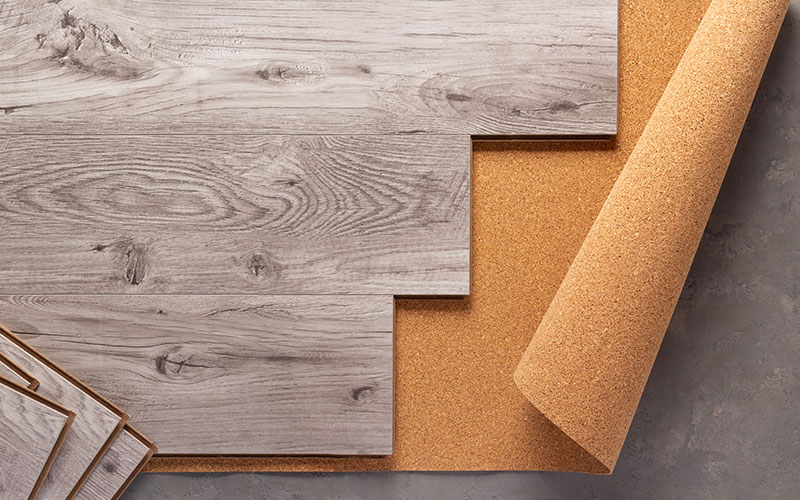
How to build a tender-grade distributor specification sheet
Most procurement teams want eight clear data points to compare SPC and WPC for big orders:
● Core composition: SPC is 60–80% calcium carbonate and 18–30% PVC; WPC is 30–40% wood flour, 40–50% PVC, and a bit of foaming agent.
● Density and weight: SPC is 1.9–2.1 g/cm³ (4.0 mm = 7.6–8.0 kg/m²); WPC is 1.0–1.3 g/cm³ (6.5 mm = 6.5–7.5 kg/m²).
● Dimensional stability: SPC stays under 1‰ shrinkage (80°C × 6h); WPC goes 2–3‰.
● Indentation resistance: SPC keeps it at or below 0.10 mm; WPC is 0.15–0.25 mm.
● Acoustic performance: SPC gets IIC 55–62 (needs underlayment); WPC gets IIC 65–72 with its own pad.
● Fire classification: SPC is Bfl-s1; WPC is Cfl-s1.
● Joint strength: SPC short-edge joints test at 200–300 lbf/in; WPC at 150–220 lbf/in.
● Regulatory compliance: Both need FloorScore, CARB Phase 2, and EPA TSCA Title VI (especially for WPC’s wood). For the EU, you need EN 14041 CE.
Frequently Asked Questions
What is the typical MOQ for SPC and WPC orders?
SPC usually has a minimum order of 3,000 to 5,000 m² per SKU. WPC needs 5,000 to 8,000 m² per SKU because of how the foam is made. The higher MOQ for WPC is all about keeping the expansion ratios steady during production.
How many square meters fit in one 40’HQ container?
A 40’HQ container fits 4,500 to 5,500 m² of SPC—it’s heavy, so weight is the limit. WPC is lighter and thicker, so you can load 6,000 to 7,000 m² per container before you run out of space.
Which certifications must distributors verify before importing?
EU buyers want EN 14041 CE marking and a Bfl-s1 fire rating. North American imports need FloorScore, CARB Phase 2, and EPA TSCA Title VI for formaldehyde. WPC coming into California also needs TB 117 because of the wood, but SPC usually doesn’t.
What service life and wear-layer thickness should distributors stock?
For DIY retail, stock a 0.3 mm wear layer (12 mil) for 8–12 years of use. For light commercial, go with 0.5 mm (20 mil) and expect 12–15 years. Heavy commercial jobs need 0.7 mm (28 mil) for 15–25 years. EN 685 Class 33 and 34 match most commercial tenders.
How do distributors handle SPC short-edge chipping claims?
SPC short-edge chipping is the main claim type in the industry, with return rates around 2 to 4 percent. Transit drops and cold temperatures below 0°C often cause these chips, making them more common than WPC joint compression failures.
ASTM F2199 shows that SPC short-edge joint strength measures about 200 to 300 lbf/in. WPC usually lands between 150 and 220 lbf/in. But SPC gets brittle when it’s cold, especially below freezing, so edge fractures happen more in winter shipping.