Vinyl floor patterns shape how LVT and SPC flooring look, how you install them, and how they perform. Pattern layout matters because herringbone, chevron, and plank layouts change visual balance, space perception, material waste, and install time.
Pattern controls plank direction and joint flow, so it directly affects durability at seams and finish quality. Herringbone and chevron create strong visual movement, while plank layouts give you clean lines and faster installs.
Each option comes with different layout tolerances, cut loss rates, and labor needs. The right pattern can make a space feel wider, longer, or more ordered—without changing the flooring itself.
This guide breaks down how aesthetics compare to installation complexity and cost, and gives a clear spec checklist.
Three Major Vinyl Floor Patterns
Three big vinyl floor patterns include Herringbone, Chevron, and Standard plank layout.
Herringbone: Interlocking geometry adds visual detail and needs tight tolerances.
Chevron: Angled symmetry creates directional flow and calls for precise milling.
Standard Plank Layout: Linear placement speeds up installation, improves yield, and keeps rooms feeling continuous.
Herringbone Layout
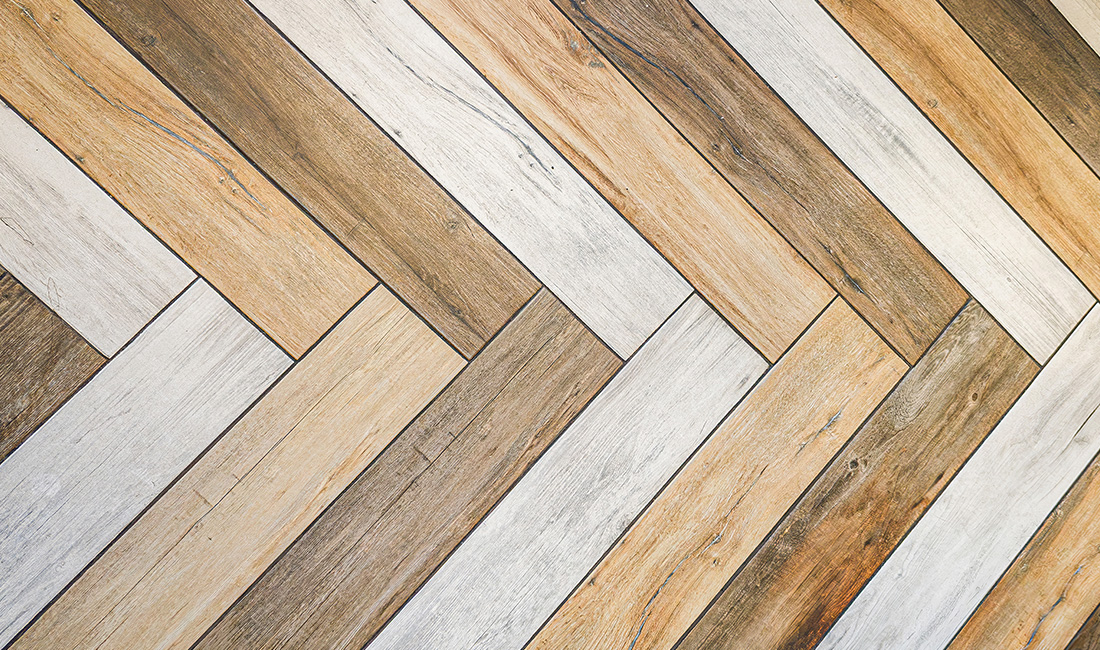
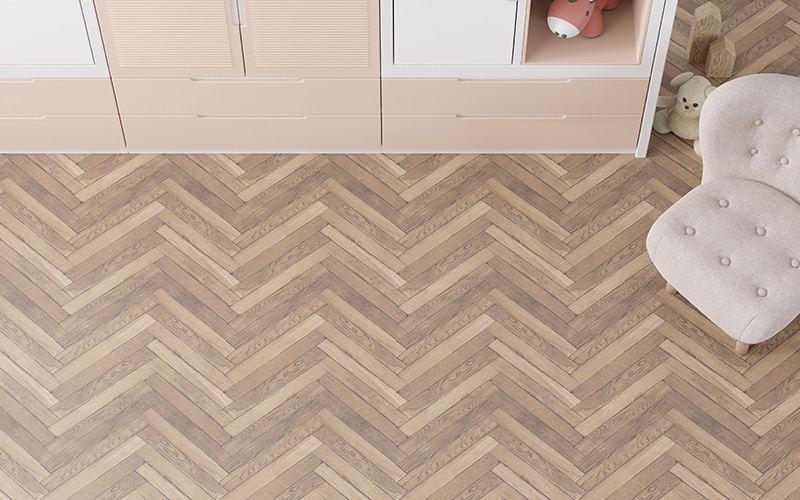
Herringbone layout uses rectangular planks set at 90° to form a zig-zag grid. Each joint locks the next plank in place. This pattern spreads visual weight evenly, making rooms feel structured and balanced.
LVT herringbone and SPC herringbone are the main vinyl products. LVT herringbones use glue-down formats to keep movement in check, so joints stay tight. SPC herringbones have rigid cores add impact resistance, so traffic wear stays uniform.
Key specifications for herringbones are plank size, build, and subfloor. Plank size is mostly between 4″x18″ and 6″x24″, which helps with clean turns. Thickness of 4–6 mm and a 12–20 mil wear layer to reduce edge stress. Subfloor needs to be flat within 3 mm over 10 ft, or you’ll get lipping.
For installation, dryback is best for precision, but click systems save time if you align carefully. Use direction lines and 6–8 mm expansion gaps to control growth.
Common use cases include living rooms, hallways, boutique retail, and hotels, which benefit from the controlled movement and refined look.

Chevron Layout
Chevron layout forms a V-shape using angled plank ends. Each pair meets at a fixed angle. The angled joint pulls your eye forward, so spaces feel longer and more dynamic.
Vinyl flooring options are chevron LVT and chevron SPC. Chevron LVT uses glue-down keeps angles from drifting, so points stay sharp. Chevron SPC is favored by rigid cores holding angles, so seams stay consistent.
Key specifications for chevron are angle and accuracy. 30° gives a softer look, while 45° increases contrast and direction. Tight length and angle tolerances are crucial—small errors add up fast.
For installation considerations, the center-line layout controls symmetry, so both sides mirror cleanly. Glue-down works for complex rooms, while click systems are okay for simple rectangles.
Common use cases include contemporary spaces, luxury apartments, and restaurants, which often rely on the strong direction and clean geometry.
Standard Plank Layout
Standard plank layout installs boards in straight runs with a stagger. Linear joints make planning easier. This layout cuts down on waste, so you get better material yield.
Compatible vinyl types are SPC, LVT, WPC, loose lay. You can match cost and performance thanks to broad compatibility.
Key specifications for standard plank layout are size and build. 7″, 9″, and 12″ widths with long planks are the most popular now. Core stability and a 12–20 mil wear layer help prevent dents and scuffs.
For installation recommendations, Random or 1/3 offsets for end joints, which spreads out stress and boosts strength. Align transitions with sightlines to support movement between rooms.
Common use cases include homes, offices, and commercial spaces, which usually want speed, flexibility, and easy repair.
Comparison Of Aesthetics, Installation Complexity, And Cost
Vinyl floor patterns really do differ in visual impact, installation effort, material waste, and budget.
Aesthetics: Herringbone creates a formal, woven look since planks meet at right angles. Rooms feel structured and detailed. Chevron forms clean V-shapes with mitered ends, so lines stay continuous and spaces look longer. Straight plank layouts keep lines parallel, making for a calm, modern look with little visual noise.
Installation Complexity: Herringbone needs precise cuts and tight tolerances, so installers spend more time on alignment and dry fitting. Chevron requires factory-cut angles, and if ends don’t meet exactly, mistakes show up fast. Straight plank installs rely on repeatable spacing. Click-lock systems help crews move faster and make fewer mistakes.
Material Waste: Patterned layouts create more offcuts because angles break standard rows, so waste can be higher than with straight installs. Chevron keeps waste down if you use pre-cut planks with matching lengths. Straight planks usually create the least waste since you get more full-length runs.
Cost: Labor is the main driver of price differences. Time and skill needs change with the pattern, so herringbone and chevron cost more to install than straight planks. Vinyl plank materials are often just a few bucks per square foot, but patterned installs add labor, so total cost climbs even if the material price stays about the same.
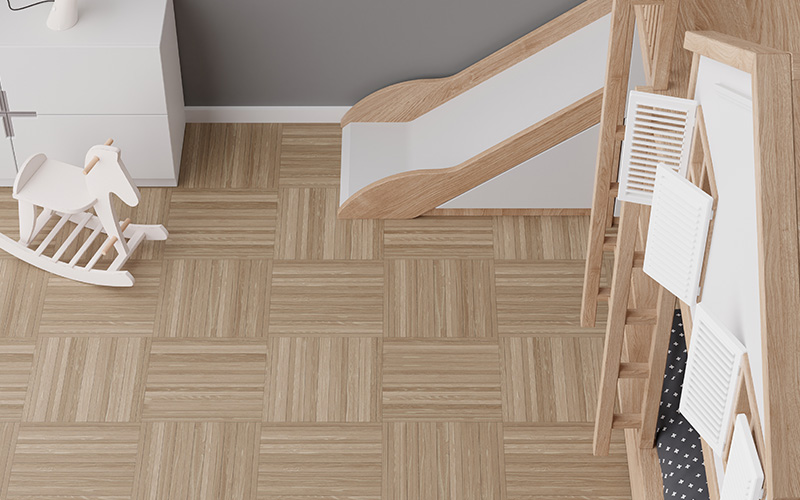
How To Choose The Right Pattern: A Quick Decision Guide
Plank size, room layout, and traffic paths all play a part, so the layout really does influence visual flow and installation effort.
For a luxury effect, choose chevron because angled plank cuts form a sharp V line. The room gets a strong focal axis, but you’ll see more waste from those 45-degree cuts and tighter tolerances.
For classic elegance, choose herringbone since rectangular planks lock at right angles. This adds depth, making small rooms feel wider, and works well in spaces with multiple entry paths.
For easiest installation and lowest waste, choose standard plank layouts like straight lay or running bond. Planks align end to end, so installers can move faster, waste less, and keep alignment simple.
Room shape also matters. For small rooms, choose herringbone because repeating angles break up short wall lengths, visually stretching the floor.
For long corridors, choose plank layouts laid parallel to foot traffic. Linear direction reduces visual noise and supports clear movement through narrow spaces.
Budget and skill level play a role too. Chevron needs higher labor precision and layout control, while plank layouts can handle minor subfloor variation and let you place boards faster.
Technical Specification Checklist For Designers & Contractors
Below is the technical specification checklist for designers and contractors.
Plank size consistency: Herringbone and chevron patterns rely on repeating angles, so plank length and width need to stay within tight tolerances. This helps joints line up and reduces visible gaps—more than with loose-tolerance planks used in straight lay patterns.
Click system type/ locking strength: A strong drop-lock or angle-lock system improves joint stability. Patterned layouts resist edge lift better than weak click systems, which might work for plank layouts but can fail under angled stress.
Wear layer level (0.3 /0.5 / 0.7 mm): Wear layers protect the print film. Thicker ones support longer service life. Go with 0.3 mm for light residential use, while 0.5–0.7 mm suits commercial traffic.
Surface texture options (EIR/ matte/ embossed): Texture affects light reflection. EIR and embossed finishes hide seams better than smooth surfaces, so patterned floors show less visual break at joints.
Certification requirements (FloorScore/ CE): Indoor air quality and product compliance matter. Certified floors meet emission and safety standards, which helps with approval for residential and commercial projects.
Recommended subfloor conditions: Patterned layouts amplify flaws, so subfloors need to be flat, clean, and dry within manufacturer limits. Moisture testing and leveling help reduce joint stress and pattern drift.
Conclusion
Vinyl floor patterns shape both appearance and performance. Layout controls sightlines and joint flow.
Herringbone tightens visual rhythm. Chevron, on the other hand, creates bold arrows that really guide your eye.
Designers often pick herringbone to soften long rooms. Chevron works well when you want to guide movement or draw people in a certain direction.
Pattern choice affects installation too. Straight plank layouts help crews reduce cuts and waste, so labor time goes down.
This directly influences cost. Complex patterns need tighter alignment and skilled placement, which can be tricky.
Material specs matter here. Wider planks highlight seams, so straight lay fits stable LVT or SPC cores best.
Herringbone benefits from planks with consistent length and square ends. As joint density increases, wear layer thickness and locking strength become more important.
Pick the right pattern for your room size, traffic, and budget. Sampling helps cut risk, so you might want to reach out to Changlong for pattern boards, custom layouts, or OEM/ODM support to match specs before production.
FAQs
1.How to layout a herringbone pattern in LVP?
Start by snapping a centerline in the room, then place the first two LVP planks at a 90° angle to form the first “V.” Work outward in mirrored rows, keeping the pattern aligned with the centerline.
2.What is the rule of 3 flooring?
It means staggering plank end joints by at least three times the plank width to avoid repeating seams and improve stability and appearance.
3.How to layout a herringbone pattern?
Find the room’s centerline, set your first “V” exactly on that line, and continue laying rows symmetrically to both sides to keep the pattern straight.
4.What is the best layout for vinyl plank flooring?
A straight plank layout with a staggered pattern (⅓ or ½ offset) is the most stable, easiest to install, and works well for most spaces.