
Picking the wrong SPC flooring thickness can cost you more than just money. If a 4mm floor dents under a fridge or a 5mm click joint gives out in a busy hallway, you might end up dealing with labor, shipping, and brand headaches that can run over $8,000 each time.
The difference between 4mm, 5mm, and 6mm SPC flooring really controls how deep floors dent, how much unevenness they tolerate, how strong the locks are, and how often you’ll face claims. A 6mm core gets about 70% less denting than 4mm under the same weight, can handle subfloor bumps up to 5mm instead of 3mm, and gives you 80% stronger click joints that stand up to dragging furniture and rolling chairs.
This guide dives into the facts behind thickness claims. You’ll see how core density, lock size, and wear layer work together in real life. Not sure which thickness fits your space, floor condition, or code? I’ll help you match the right one so you can avoid warranty nightmares.
What Defines SPC Flooring Thickness — and Why 4mm vs 5mm vs 6mm Total Numbers Mislead Buyers?
Total plank thickness doesn’t tell the whole story. The rigid core makes up 85–90% of the strength, while the wear layer and backing barely help with weight. Core density (kg/m³) does a lot more for dent resistance and subfloor tolerance than just the millimeter number you see advertised.
How Is Total Thickness Split Across Wear Layer, Core, and Backing?
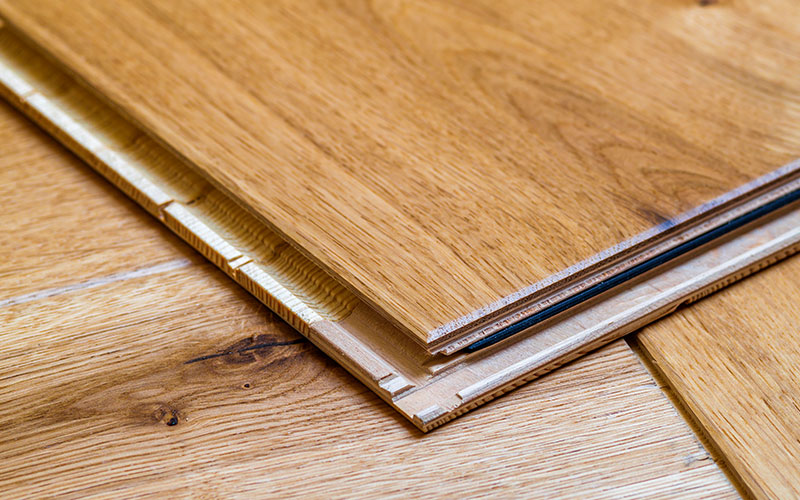
A 4mm SPC plank usually has a 3.5–3.7mm rigid core, a 0.3–0.5mm wear layer (12–20 mil), and a thin back layer. The core is about 88–93% of the total, while the wear layer—despite what ads say—is just 7–12%. For 5mm, you get a 4.0–4.3mm core and a 0.3–0.7mm wear layer. 6mm planks have a 4.5–5.0mm core, with the same 0.3–0.7mm wear layer. So, that extra millimeter between 4mm and 5mm mostly goes into the core, not the top. If you just look at total thickness and ignore the core, you’ll miss what really matters for denting and locking strength.
Why Does Core Density (kg/m³) Matter More Than Total Thickness?
Core density tells you how much weight the core can take before it gets a permanent dent. A 4mm plank is usually about 1,800 kg/m³; 5mm jumps to 1,950–2,050 kg/m³, and 6mm hits 2,000–2,100 kg/m³ (per EN ISO 24343-1). Put a 500N chair leg on a 4mm core and you’ll see about 0.12mm of leftover dent with 85% bounce-back. A 6mm core with higher density only dents 0.04mm and recovers 96%—that’s a 70% drop in denting. Higher density means the particles are packed tighter, so the floor spreads weight better, no matter if it’s 5mm or 6mm thick. Two 5mm planks with different densities won’t perform the same, so kg/m³ matters way more than just the thickness listed on the box.
How Does SPC Flooring Thickness Affect Denting and Indentation Resistance Under Real Load?
Thicker SPC cores handle dents better by giving more material and bounce-back. A 6mm plank dents about 70% less than a 4mm when you put the same 500N weight on them. The thicker the core, the more it spreads out the pressure, so you don’t get those ugly marks.
What Do EN ISO 24343 and ASTM F1914 Indentation Tests Reveal?
EN ISO 24343-1 and ASTM F1914 look at how deep the dent stays after pressing down with a set weight—usually 500N (think a chair leg with someone sitting)—for 24 hours at 23°C. Test results show 4mm SPC leaves about 0.12mm of dent with 85% bounce-back, while 6mm leaves just 0.04mm and bounces back 96%. That 70% drop in denting is because the thicker core spreads out the pressure (around 4 MPa under a stiletto heel), so it doesn’t crush as much in one spot.
How Should Wear Layer Thickness Match Core Thickness?
The wear layer needs to fit the core thickness to keep things balanced for traffic classes in EN 685. A 0.3mm wear layer (12 mil) goes with 4mm cores for homes (Class 23), giving about 4,000 Taber abrasion cycles. For commercial, you want 0.5mm with 5mm cores (Class 31–32, 6,000+ cycles) or 0.7mm with 6mm (Class 33–34, 8,000+ cycles). If you slap a thin wear layer (0.3mm) on a thick 6mm core, you waste the core’s dent resistance because the top wears out first. On the other hand, a thick wear layer on a thin core means the surface is tougher than the core below, so the floor starts to show subfloor bumps faster.
How Does SPC Flooring Thickness Control Deflection and Subfloor Tolerance Standards?
All SPC needs a flat subfloor, but thicker cores bend less over small bumps and hide subfloor flaws better. Moving up in thickness only pays off if your subfloor is close to what the thicker planks can handle.
What Subfloor Flatness Does Each Thickness Tolerate Per ASTM F710?
4mm SPC needs the subfloor to be <3mm off over 2m (about 1/8″ in 6 feet) or you’ll see bumps and stressed joints. 5mm SPC can handle ≤4mm over 2m, so it forgives a few dips. 6mm SPC works with ≤5mm over 2m (about 1/4″ in 10 feet), so it bridges more uneven spots. ASTM F710 says 3/16″ over 10 feet is the max, but most brands want 1/8″ in 6 feet for homes and FF 25/FL 20 for commercial (ASTM E1155).
Thicker cores don’t bend as much over gaps, so the floor looks smoother. A 6mm core at 2,000–2,100 kg/m³ with more stiffness can hide small subfloor flaws, while a 4mm core at 1,800 kg/m³ will flex and show every bump.
When Does Upgrading Thickness Beat Investing in Self-Leveling Underlayment?
Going from 4mm to 6mm usually adds $0.50–$1.50/sf but can save you from buying self-leveling underlayment (SLU) if your subfloor is 3–5mm off over 2m. SLU can cost $0.75–$1.50/sf, so picking 6mm instead could save $1,200–$2,000 on a 1,000 sf job if your floor isn’t too far gone. If you get a claim—like a joint failing, redo labor, shipping, and brand hits—it’ll usually cost $4,000–$8,000, which is way more than the leveling.
Go for thicker planks if your subfloor is too rough for thin ones but still okay for the thick option. Use SLU if your floor is way off (>5mm over 2m) or when you need the floor as thin as possible for door clearance or other reasons.
How Does SPC Flooring Thickness Determine Locking Joint Strength and Underlayment Pairing?
Thicker SPC cores give you bigger locking profiles, boosting the joint strength from 1.8 kN/m in 4mm planks to 3.2 kN/m in 6mm (EN 13329). If you put a thin core over a thick foam pad, the support gets uneven, which puts extra stress on the lock and hurts sound ratings (often dropping below IIC 50).
What Are the Tensile Strength Values of Unilin, Valinge, and I4F Locks at Each Thickness?
Locking strength grows fast with thickness. 4mm planks get about 1.8 kN/m lateral strength, 5mm planks hit 2.5 kN/m (up 40%), and 6mm planks reach 3.2 kN/m (80% better than 4mm). Thicker cores let you mill deeper locks, so you get more grip and less chance of the joints pulling apart. Factory tests show 4mm locks can handle short-term weight but often fail in busy spaces, while 6mm locks pass the toughest commercial tests for rolling chairs and carts.
Why Does Pairing a Thin Plank With a Thick Pad Cause Joint Failure?
If you put a 4mm plank over a 2.0mm IXPE pad, you get a 1:2 core-to-pad ratio. That much padding lets the floor move up and down too much, and the locks start to take the hit. 4mm boards should use ≤1.0mm IXPE, 5mm with ≤1.5mm, and 6mm with ≤2.0mm to keep the joints stable (per EN 16511). Go over those numbers, and you’ll see locks loosen, edges gap, and sound ratings drop because the foam squishes unevenly. A 5mm core with 1.0–1.5mm IXPE gets you IIC 50–55 (good for apartments), but a 4mm plank with 2mm foam often can’t even hit IIC 45 because it just isn’t stable enough.
What Are the Pros and Cons of 4mm, 5mm, and 6mm SPC Flooring Thickness Options?
Each thickness has its own trade-offs. 4mm is the cheapest but needs a super flat subfloor and is really only for light home use. 6mm costs more up front but gives you commercial-level strength and can save you money in the long run by skipping leveling and avoiding claim costs. 5mm sits in the middle, offering a balance if you’re not sure which way to go.
4mm SPC Flooring Pros and Cons
Pros: 4mm SPC flooring usually costs $2.50–$4.00 per square foot installed—about 15–25% less than 5mm. It barely raises the floor, so you don’t get awkward bumps at doorways. This makes it a good pick for budget makeovers and DIY jobs. It’s lighter (7.5–8 kg/m²), so you can fit more in a shipping container—maybe 22% more compared to 6mm—so shipping big orders costs less. The core is 3.5–3.7mm thick with a 0.3–0.5mm wear layer, which is fine for bedrooms and home offices that don’t see much foot traffic (EN 685 Class 23).
Cons: 4mm needs a really flat subfloor—less than 3mm difference over 2 meters (ASTM F710)—so you’ll often have to add self-leveling underlayment ($0.75–$1.50 per square foot), which eats up your savings fast. The locks aren’t that strong (1.8 kN/m per EN 13329), so dragging furniture or temperature swings can break them. Density is 1,800 kg/m³, so chair legs can leave about 0.12mm dents (ISO 24343-1). Sound ratings are low (IIC 28–32), which won’t pass IBC multi-family codes (needs IIC 50) unless you use thick soundproofing underneath.
5mm SPC Flooring Pros and Cons
Pros: 5mm SPC gives you the most value long-term. The core is 4.0–4.3mm thick, density is 1,950–2,050 kg/m³, and lock strength is around 2.5 kN/m—much tougher than 4mm. Add 1.0–1.5mm IXPE underlayment and you’ll get IIC 50–55 and STC 50–52, which meets sound code for apartments without extra layers. It can handle subfloor bumps up to 4mm over 2 meters and lasts 12–20 years with medium use. Warranties are usually 15–25 years for homes and 5–10 years for light commercial spaces.
Cons: Price goes up to $3.50–$5.50 per square foot installed—about 15–25% more than 4mm. You still need the floor to be within 4mm/2m flatness, or the locks can get stressed and fail eventually. The wear layer (0.3–0.7mm) is good for light to medium commercial use but not enough for really heavy traffic (Class 33–34), where you’d want at least 0.7mm wear layers and much higher abrasion resistance.
6mm SPC Flooring Pros and Cons
Pros: 6mm SPC is dense (2,000–2,100 kg/m³) and resists dents well—down to 0.04mm, which is a big improvement over 4mm. It bounces back to shape 96% of the time (ISO 24343-1). Lock strength is strong (3.2 kN/m per EN 13329), and it can handle subfloor unevenness up to 5mm over 2 meters (ASTM F710), so you might save $1,200–$2,000 on leveling for a 1,000 sq ft job. With a 0.5–0.7mm wear layer, it’s rated for EN 685 Class 33–34 light commercial use and comes with 15–20 year commercial warranties. In homes, it can last well over 25 years.
Cons: It costs $5.00–$7.50 per square foot installed—so, 40–60% more than 4mm—and it’s heavier (9.5–11 kg/m²), so you can’t ship as much at once, making freight pricier. For small homes with not much foot traffic, 6mm is probably overkill. 5mm does the job just fine for most whole-house projects and costs less over time.
Which SPC Flooring Thickness Lowers Claim Rates — and When Should You Specify 4mm vs 5mm vs 6mm?
Claim rates drop by 64% when you match thickness to your subfloor and how much traffic the floor gets. Most warranty problems—joint gaps, dents, noise, and curling—come from using the wrong thickness for the job.
What Claim Types Map to Which Thickness Mismatch?
If you install 4mm over a wavy subfloor (more than 3mm/2m), you’ll see joint gaps and broken locks, since its 1.8 kN/m lock strength just can’t handle the stress. Dents from furniture show up more with 4mm (1,800 kg/m³ core, 0.12mm dent) than 6mm (2,000–2,100 kg/m³, 0.04mm dent)—that’s a big difference (EN ISO 24343-1). Noise is a problem with 4mm too (IIC 28–32), since it doesn’t meet IIC 50 code for apartments, but 5mm with 1.0–1.5mm IXPE does (IIC 50–55). Edge curling in sunrooms or heated floors happens when 4mm deforms more than 0.06%, while 6mm holds its shape better.
When to Choose 4mm vs 5mm vs 6mm — Buyer Decision Framework
Pick 4mm for bedrooms and closets where the floor is flat (under 3mm/2m) and you don’t have rolling chairs. Expect it to last 5–10 years, with a 10–15 year home warranty, for $2.50–$4.00 per square foot installed. Go with 5mm for living rooms and light commercial spaces where the floor can be a bit less perfect (up to 4mm/2m), lock strength jumps 40% to 2.5 kN/m, and density (1,950–2,050 kg/m³) gives you 12–20 years of use and IIC 50–55 for sound code. Use 6mm for busy hallways, stores, and high-traffic areas where the floor might be off by up to 5mm/2m. You’ll save $1,200–$2,000 per 1,000 square feet on leveling, plus get 3.2 kN/m lock strength and 0.04mm dent resistance for full commercial ratings and 15–20 year warranties. Skipping on thickness here can backfire—claims can cost $4,000–$8,000, which is way more than you’d save on leveling.
Conclusion
Thickness matters more than any other SPC feature when it comes to claim risk. As thickness goes up, so does core density, lock depth, and how much a floor can handle bumps—each one affects whether your floor lasts or ends up as a warranty headache.
4mm is cheapest up front, but you’re taking on more risk. It dents more (0.12mm under heavy furniture), lock strength is low (1.8 kN/m), and you need a super flat subfloor—if not, you’ll pay for leveling or risk the floor failing in just 2–3 years.
5mm is the sweet spot for most homes. You get better density (1,950–2,050 kg/m³), about half the dents, and 40% stronger locks (2.5 kN/m). It handles everyday use and most furniture without callbacks.
6mm is the workhorse for tough jobs. Dents are tiny (0.04mm, 70% better than 4mm), lock strength is high (3.2 kN/m), and you can get away with less-perfect subfloors (up to 5mm/2m), which means less leveling and 60% less risk overall.
Your call should focus on three things: expected traffic (EN 685), real subfloor flatness (ASTM F710), and total cost—including claims. Match wear layer to core thickness, don’t put a thick wear layer on a thin core, and keep underlayment in the right range for the plank thickness.
Thicker floors cost more, but you’ll see fewer claims, less rework, and less brand damage. For most homes, 5mm is just right. For light commercial or risky spots, 6mm is the only real choice.
Frequently Asked Questions
Does 4mm SPC Flooring Really Have Higher Claim Rates Than 5mm or 6mm?
Yes—industry data shows 4mm has 2–3 times more claims than 6mm. The main issues: joint gaps when the subfloor isn’t flat enough, dents from low density (1,800 kg/m³), noise problems when IIC 28–32 falls short of code, and edge curling in sunrooms or heated rooms. One claim—covering joint repairs, labor, shipping, and lost reputation—can cost $4,000–$8,000, wiping out any upfront savings from thinner floors.
What’s the Difference Between Total Thickness and Core Thickness in 4mm vs 5mm vs 6mm SPC?
Total thickness includes the wear layer, design film, SPC core, and base layer. The core is about 85–90% of the total and is what really gives the floor its strength. For 4mm, you get about 3.5–3.7mm core and 0.3–0.5mm wear layer. For 6mm, it’s 4.5–5.0mm core and up to 0.7mm wear layer, which means deeper, stronger locks (lock strength jumps from 1.8 kN/m to 3.2 kN/m per EN 13329) and better dent resistance.
Can a Thicker Underlayment Compensate for Thinner SPC Flooring?
No—it doesn’t work that way. If you go over the recommended pad thickness (4mm board with more than 1.0mm IXPE, 5mm with more than 1.5mm, 6mm with more than 2.0mm), you’ll actually make the joints weaker because the floor moves too much and pulls at the locks. Underlayment helps with sound (5mm plus 1.5mm IXPE can hit IIC 50–55), but it can’t make up for a thin, soft core when it comes to strength, dent resistance, or bridging uneven floors.
Which SPC Flooring Thickness Meets IIC 50 / STC 50 Building Codes for Multi-Family Housing?
A 5mm core with 1.0–1.5mm IXPE usually gets you IIC 50–55 and STC 50–52, which meets code for apartments. Plain 4mm boards only reach IIC 28–32 and STC 30–35, which isn’t enough and leads to noise complaints. 6mm with 2–3mm acoustic backing can go even higher (IIC 60+, STC 55+) for high-end projects.
How Much Can Specifying 6mm SPC Save in Subfloor Preparation Costs?
If you pick 6mm instead of 4mm, you can save around $1,200–$2,000 on a 1,000 square-foot job. Why? Thicker boards like 6mm handle uneven spots in the floor—up to 5mm over 2 meters. The 4mm option needs the floor to be almost perfectly flat, less than 3mm over 2 meters, following ASTM F710. That means you’ll need less self-leveling underlayment when you use 6mm. Self-leveling compound isn’t cheap, usually $0.75–$1.50 per square foot, and labor adds up too. By going with 6mm, you skip a lot of that work and cost. Plus, it’s less likely you’ll deal with joint problems after the job’s done. Seems like a pretty good deal, right?