When you’re taking on a huge commercial flooring job, you need more than just basic product info. The choice between glue-down LVT and SPC click flooring impacts everything—subfloor prep costs, how fast you can install, acoustic requirements, and even warranty coverage over thousands of square meters.
Glue-down LVT earns ISO 10874 Class 33–34 Heavy Commercial certification with full-bond adhesive installation. SPC click flooring gets you faster installs and built-in acoustic performance, but most warranties only back it for Class 31–32 Light to General Commercial use.
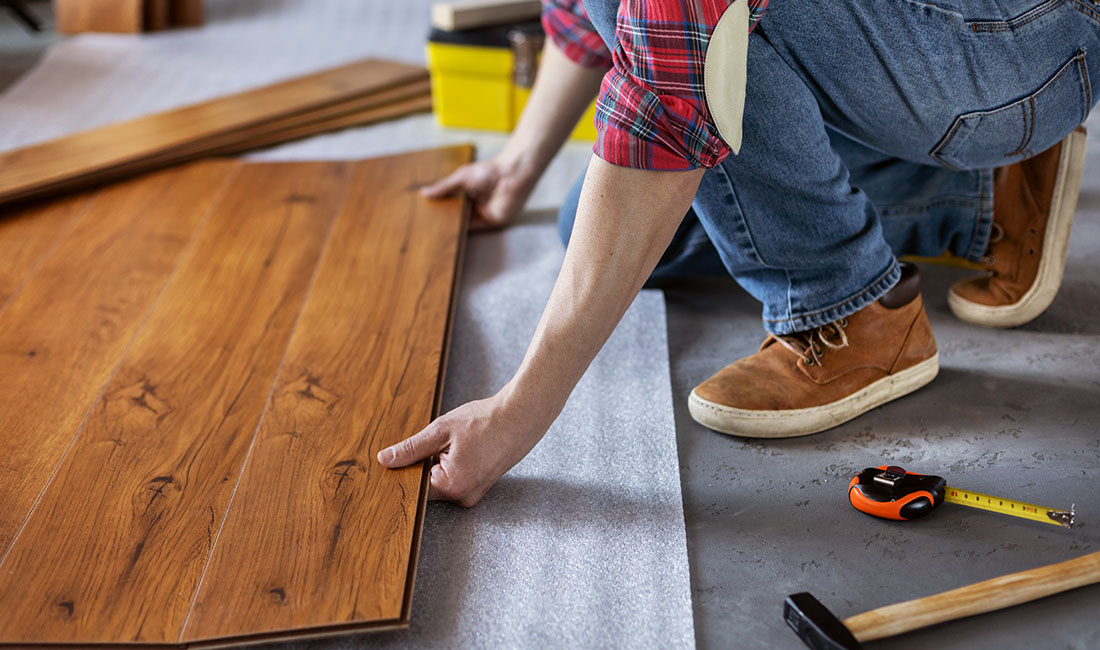
The difference isn’t just about how you stick it down. Glue-down LVT uses a flexible PVC core bonded right to the subfloor, making a single, solid surface that spreads out rolling loads everywhere.
SPC click flooring has a rigid stone-polymer core and floats above the subfloor. That means it puts stress on the locking joints, especially under constant wheeled traffic. This core difference changes everything from subfloor flatness tolerance to how you handle repairs in busy buildings.
This guide digs into real performance data for both systems in tough commercial settings. We’ll look at subfloor needs, acoustic standards, rolling load resistance, and exactly when each system makes sense for airports, hospitals, retail, or offices.
What Is the Structural Difference Between Glue-Down LVT and SPC Click Flooring in Commercial Contexts?
It all starts with the core and how you install it. Glue-down LVT uses a flexible PVC core glued to the subfloor. SPC click flooring relies on a rigid stone-polymer composite core that floats over the subfloor instead.
How Core Composition Drives Performance Under Commercial Load
Glue-down LVT has a flexible PVC core, usually 2.0–3.2 mm thick, with a wear layer of 0.3–0.7 mm. SPC flooring uses a stone-polymer core with density around 1.9–2.1 g/cm³ and total thickness from 4.0–8.0 mm.
Glue-down LVT’s adhesive spreads the load across the entire floor. Floating SPC systems, on the other hand, concentrate stress at the locking joints. EN 425 rolling load testing—think office chairs, carts, hospital beds—shows glue-down LVT gets Class W (heavy wheel load) certification. SPC click usually only reaches Class 21–22.
Why Installation Method Is a Structural Decision, Not a Convenience Choice
Glue-down LVT, once cured for 48 hours, creates a solid, unmoving surface. Floating SPC click lets planks move, which starts to wear out the locking joints if loads go over 1 kN.
Glue-down LVT needs a flatness of no more than 3 mm deviation across a 1.8 m straightedge (ASTM F710). SPC click is a bit more forgiving—up to 3–5 mm over 2 m. But floating floors can’t run more than 8–10 m without expansion joints, making SPC tricky in big, open commercial spaces where temperature swings can be huge.
How Does Subfloor Flatness Tolerance Differ Between Glue-Down LVT and SPC Click?
Glue-down LVT needs the subfloor to be pretty flat—no more than 3 mm deviation over 1.8 m—to keep the adhesive working right. SPC click can handle 3–5 mm over 2 m, thanks to its rigid core. The difference matters because glue-down systems rely on full contact for even load, while floating systems use their locking mechanism to bridge small imperfections.
ASTM F710 and EN 13318 Flatness Standards Decoded for Commercial Installers
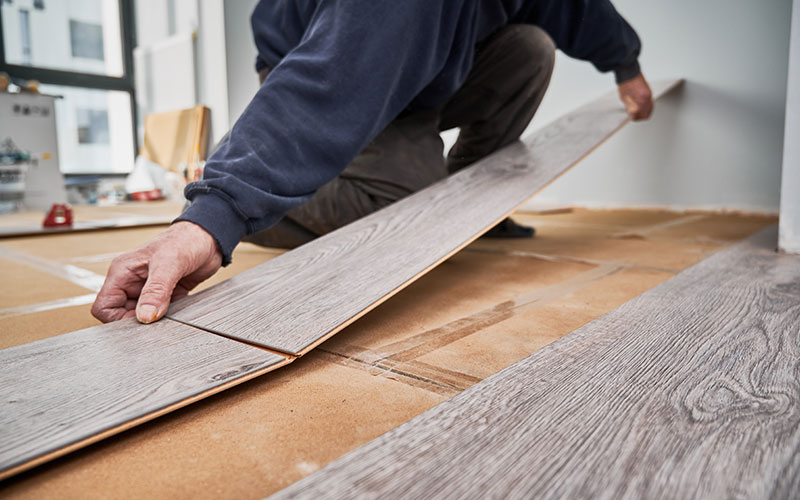
ASTM F710 calls for a max 3 mm deviation under a 1.8 m straightedge for glue-down LVT. EN 13318 says SR1 is ≤3 mm under 2 m for bonded systems, and SR2 is ≤5 mm for floating ones. SPC click can handle the SR2 level because its thick, rigid core bridges over small dips and bumps without stressing the wear layer.
The Failure Chain: How a 4 mm Subfloor Dip Destroys a Glue-Down LVT Floor in 12 Months
If you’ve got a 4 mm high spot in the subfloor, it keeps compressing the flexible 2.0–3.2 mm PVC core every time someone rolls over it. That puts all the stress on the adhesive right there. Once the deviation goes above 3 mm, adhesive strength drops fast, and you can get delamination in as little as 6–14 months under heavy use. Edge lifting and moisture intrusion follow, making the problem spread.
What Are the Proven Pros and Cons of Glue-Down LVT for Large Commercial Projects?
Glue-down LVT gives you true heavy commercial durability with full-bond installation that meets ISO 10874 Class 33–34. But you need a perfectly prepped subfloor and have to wait for adhesive to cure, which can slow down your project.
Where Glue-Down LVT Outperforms in High-Traffic Commercial Environments
Glue-down LVT gets Heavy Commercial warranty (ISO 10874 Class 33–34) because the adhesive spreads load everywhere. If you need to replace a tile, you can do it without tearing up the rest—just isolate the edges. It passes EN 425 Class W heavy wheel testing, which simulates 25,000 cycles at 30 kg on a 75 mm wheel. That’s a big deal for hospitals, airports, and big retail spaces.
Design flexibility is solid too. You can pick premium finishes with wear layers from 0.3–0.7 mm, so scratches and point loads don’t wreck the floor like they might in floating systems. Underfloor heating works better too, since the floor’s glued down tight and there’s no air gap. The flexible PVC core creates a single, unmoving surface after the adhesive cures.
The Hard Limits of Glue-Down LVT That Commercial Specs Often Underestimate
Subfloor flatness is non-negotiable—max 3 mm deviation over 1.8 m (ASTM F710). SPC click lets you get away with up to 5 mm over 2 m. If you skip proper prep and there’s a 4 mm high spot, you’ll see a chain reaction: LVT compresses, adhesive gets stressed, then delaminates, edges lift, moisture gets in, and the floor fails—often in under a year with heavy traffic.
Moisture vapor must stay ≤5 lbs per 1,000 sq ft per 24 hours (ASTM F1869), and subfloor RH can’t go above 75–80% (ASTM F2170). Too much moisture ruins the adhesive—this is the most common way glue-down LVT fails in commercial spaces. Hard-set adhesive also means you have to wait 48–72 hours before letting people walk on it, which can really slow things down compared to floating systems that are ready right away.
What Are the Real Pros and Cons of SPC Click Flooring in Large-Scale Commercial Spaces?
SPC click flooring is fast to install and more forgiving of imperfect subfloors. But its floating design just can’t keep up in high-traffic zones or big open areas the way glue-down systems can.
Where SPC Click Delivers Genuine Commercial Value
SPC click flooring cuts out adhesive cure time, so you can walk on it right after installation. Its rigid core handles subfloor bumps of 3–5 mm over 2 m, saving money on prep in retrofits compared to glue-down LVT’s tighter 3 mm over 1.8 m standard.
With built-in underlayment, you get ΔLw ratings of 18–22 dB for impact sound, so SPC click works for ISO 10874 Class 31–32 commercial spaces like hotels, offices, and conference rooms. The waterproof build and rigid core let you install it over old concrete or tile, as long as moisture’s under control.
Why SPC Click Has a Structural Ceiling in Large Open-Plan Commercial Floors
Floating SPC needs expansion joints every 8–10 m, breaking up large open commercial floors and leaving visible transitions. In buildings with big glass walls, temperature swings of 15–20 °C from HVAC and sun can make SPC expand or contract. Its thermal expansion (0.04–0.07 mm/m/°C) stresses the locking joints if you go over 10 m runs.
EN 425 rolling load tests show locking joints start to wear out under point loads above 1 kN. That’s why click LVT can’t get Heavy Commercial (Class 33–34) warranty—it just can’t spread the load like glue-down does. Floating floors put stress on the joints, which limits dent resistance and long-term durability in places that never close.
How Do Acoustic Performance and Rolling Load Resistance Compare Between the Two Systems?
Glue-down LVT gets airborne sound control thanks to its full contact with the subfloor. SPC click systems offer impact sound reduction with built-in underlayment. EN 425 testing separates floors that can handle hospital gurneys and pallet jacks from those that are just for lighter, rolling traffic.
Acoustic Standards That Actually Matter for Commercial Floor Specification
Glue-down LVT controls airborne noise by bonding directly to the subfloor, which works well in open offices where STC ratings matter. SPC click with underlayment gives you ΔLw values of 18–22 dB (EN ISO 717-2), so you’ll notice less impact noise than with glue-down LVT (which hits ΔLw 14–19 dB and needs a separate underlay for more). ASTM E492 and E989 set IIC ratings for North America, while EN ISO 717-2 handles Lw in Europe. The right choice depends—do you care more about footfall noise (SPC click) or blocking airborne sound (glue-down LVT)?
EN 425 Rolling Load Testing — What the Numbers Mean for Your Floor Spec
EN 425 testing puts flooring through 25,000 cycles using a 30 kg load on a 75 mm castored wheel. This simulates the wear from office chairs, shopping carts, and even medical gurneys.
Glue-down LVT passes EN 425 Class W (heavy wheel load). That makes it a solid choice for hospital corridors and airport terminals, where heavy rolling loads and pallet jacks are just part of the daily grind.
SPC click systems usually rate Class 21–22 under wheel load. Their locking joints can’t handle sustained point loads over 1 kN—they just don’t hold up.
ISO 10874 Class 33 and 34 specs demand full-bond installation to meet EN 425 Class W. So, glue-down becomes mandatory for facilities that run 24/7.
When Should You Choose Glue-Down LVT vs SPC Click for a Commercial Project?
Choosing between glue-down LVT and SPC click really comes down to traffic class, load requirements, and how fast you need the job done. Some commercial spaces just have to use full-bond systems, but others can get away with floating installs without risking the warranty or long-term performance.
Mandatory Glue-Down Scenarios — When SPC Click Is Not an Option
ISO 10874 Class 33 (heavy commercial) and Class 34 (very heavy commercial) projects need full-bond installation for Heavy Commercial Warranty coverage. Healthcare facilities with EN 425 Class W demands—think hospital corridors and airport terminals with constant rolling loads—just can’t use floating systems.
Locking joints in floating floors fail under point loads over 1 kN. In places like airports and hospitals that never close, glue-down LVT is installed in phases with sectional curing, since floating systems build up stress at expansion joints.
Glue-down LVT works for Heavy Commercial warranty because the full-bond, solid surface spreads rolling loads across the entire floor. Floating systems put stress on locking joints and can’t pass the EN 425 test (25,000 cycles at 30 kg load on a 75 mm wheel).
Defensible SPC Click Scenarios — Where the Specification Holds Up
SPC click works for ISO 10874 Class 31 (moderate commercial) and Class 32 (general commercial) spaces without any warranty headaches. Tenant improvement projects love SPC click for its zero adhesive cure time—it cuts installation by 30–40% compared to glue-down and skips the 24–48 hour wait before walking on it.
If acoustics matter—like in hotels or multi-story offices—SPC click systems with integrated underlayment can deliver impact sound reductions of 18–22 dB. In retrofits over stable tile or concrete, SPC click is a smart pick when the subfloor varies by 3–5 mm over 2 m, saving you from expensive leveling work.
Just remember, you’ll gain 6–8 mm in floor height with SPC click, versus only 2–3 mm with glue-down.
The Hybrid Zoning Matrix — Using Both Systems in One Large Commercial Project
Big projects save money by matching flooring systems to each zone’s traffic and structural needs. High-traffic areas—lobbies, main corridors, retail floors—get glue-down LVT rated for ISO 10874 Class 33.
Medium-traffic spots like hotel rooms, offices, and conference rooms use SPC click rated Class 31–32. Where these systems meet, you’ll need flush transition strips to handle the 2–4 mm height difference between glue-down and floating floors.
This hybrid approach keeps Heavy Commercial Warranty coverage where it matters. At the same time, it cuts down on subfloor prep and labor costs by limiting the tough glue-down work to only the zones that really need it, and speeds up installation elsewhere with click systems.
Frequently Asked Questions
Can SPC click flooring meet Heavy Commercial warranty requirements?
No, most manufacturers won’t offer Heavy Commercial warranties for SPC click installs. The coverage almost always calls for full-bond glue-down and ISO 10874 Class 33–34, which SPC click products rarely hit.
How long does a glue-down LVT installation take to cure before foot traffic?
Pressure-sensitive adhesive needs about 24 hours at 18 °C and 50% RH before you can walk on it. Hard-set adhesive takes 48–72 hours for a full bond.
If the temperature or humidity changes, cure time can stretch out unpredictably.
What subfloor moisture level is acceptable for glue-down LVT?
ASTM F1869 sets the moisture vapor transmission limit at ≤5 lbs per 1,000 sq ft per 24 hours. ASTM F2170 requires subfloor relative humidity to stay at ≤75–80% RH.